Publication Design · 2025

Daily VoiceAI

A real-time audio and video platform for developers, and the team behind Pipecat, the open-source framework for building voice AI agents.

Daily co-founder Kwin Kramer asked me to turn his 40-page white paper on voice AI into a printed booklet, handed out at the AI Engineer World’s Fair.

I designed a layout flexible enough to hold what a paper like this actually contains — running code, dense side-noted footnotes, and diagrams of technical concepts — without any of it interrupting the read. Code sits in its own measure, references run in a margin column beside the text they belong to, and the illustrations are drawn in the same weight as the type so a diagram reads as a sentence rather than an exhibit.

Plus a few easter eggs the engineering readership will surely enjoy discovering and decoding.

The Book

Voice AI & Voice Agents — An Illustrated Primer, all 84 pages. Click the page or use the arrows to go through it.
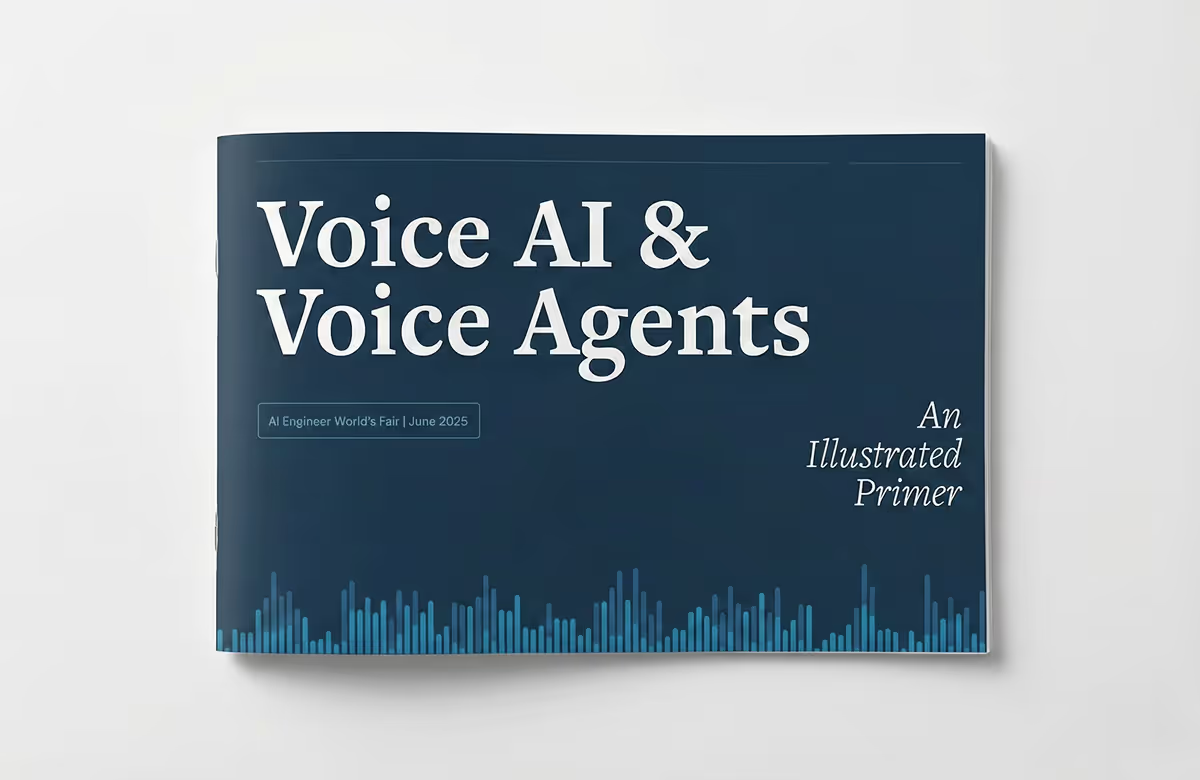
The printed booklet lying cover-up — Voice AI & Voice Agents, An Illustrated Primer, in white on dark blue over a waveform
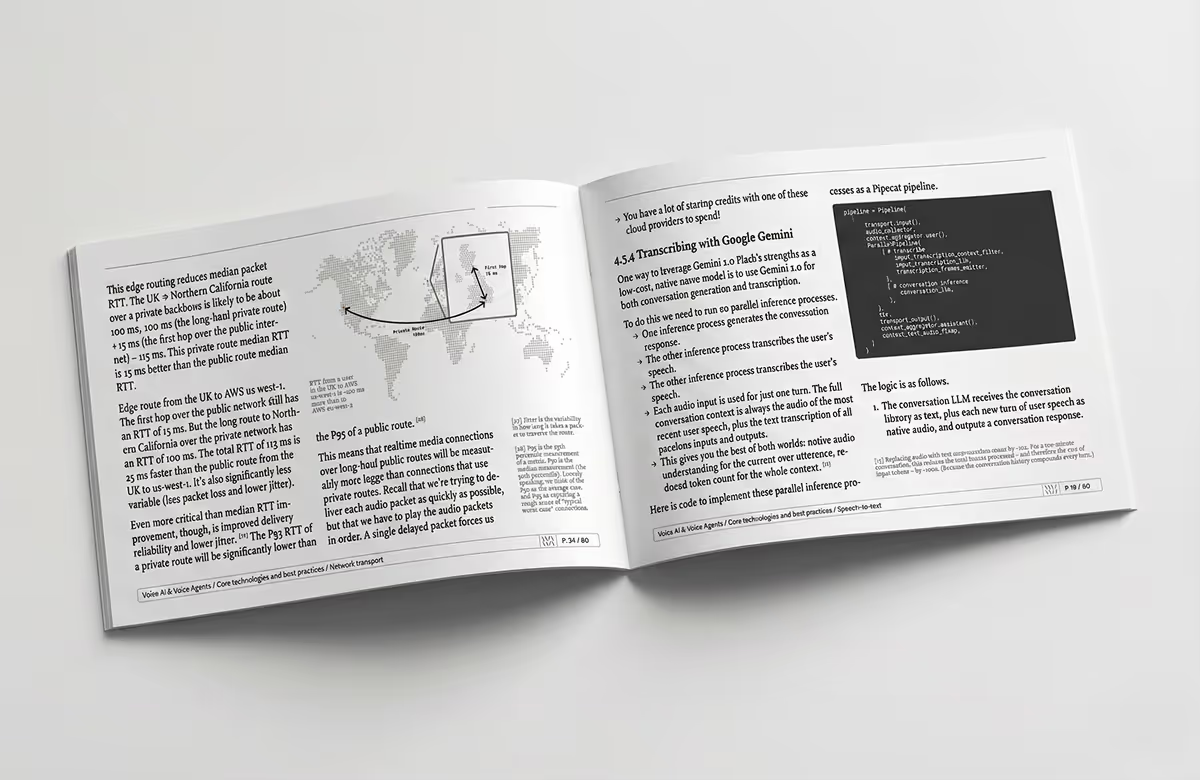
The booklet open on a spread — body text and a dotted world map on the left page, a code listing and side-noted references on the right

Illustration

Every technical concept in the book got a drawing — one line weight, one type family, no colour beyond the two blues, so a diagram is read as part of the text rather than as a decoration dropped into it.
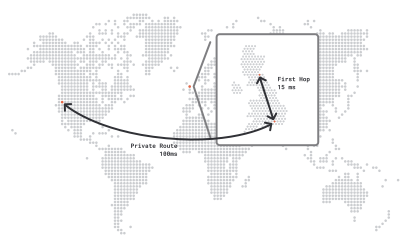
A dotted world map with a private route drawn between two continents and a first-hop inset
Network routing — the 15ms first hop against the 100ms private route, on a map dotted at the same weight as the rest of the artwork.
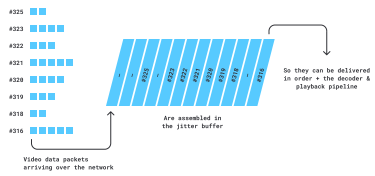
A diagram of numbered video packets arriving out of order, being assembled in a jitter buffer, and leaving in order
The jitter buffer — packets arriving ragged on the left, leaving ordered on the right.
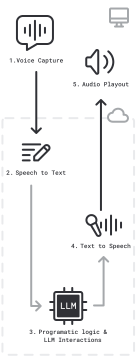
A diagram of the conversational AI loop — voice capture, speech to text, LLM, text to speech, audio playout — with the cloud-side steps inside a dashed boundary
The basic loop. The dashed boundary is the part that runs in the cloud — the single fact the rest of the book keeps coming back to.
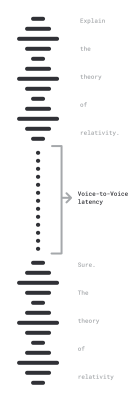
A waveform-and-transcript diagram measuring the gap between a user finishing a question and the agent starting to answer
Voice-to-voice latency, drawn as the silence between two waveforms rather than stated as a number.
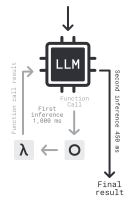
A diagram of an LLM making a function call, receiving the result, and running a second inference to produce the final answer
Function calling — two inferences and the round trip between them, timed.
When you change the way you look at things, the things you look at change.— Wayne Dyer