
About Sascha
Sascha Mombartz is a designer, entrepreneur, community builder, and artist who integrates systems thinking into every aspect of his work. Viewing design as a means of navigating complexity and uncovering elegant solutions to build meaningful and impactful experiences. His global upbringing and education at The Cooper Union have shaped his interdisciplinary, community-oriented approach to design.
Over the past decade, Sascha has led brand and product design projects across fintech, healthcare, publishing, and web3. As founder of the Office for Visual Affairs, he has guided ventures from startup through acquisition, working with clients such as Adobe, The New York Times, Google, NBC Universal, and Nestlé, as well as startups like Pluto.tv and Tilt (acquired).
Sascha co-authored the Community Canvas, a community building framework thats been translated into 15 languages. His artistic practice explores public interventions and participatory experiences that challenge social norms.
Making Data Talk
Past Curriculum: makingdatatalk.com
Class Description
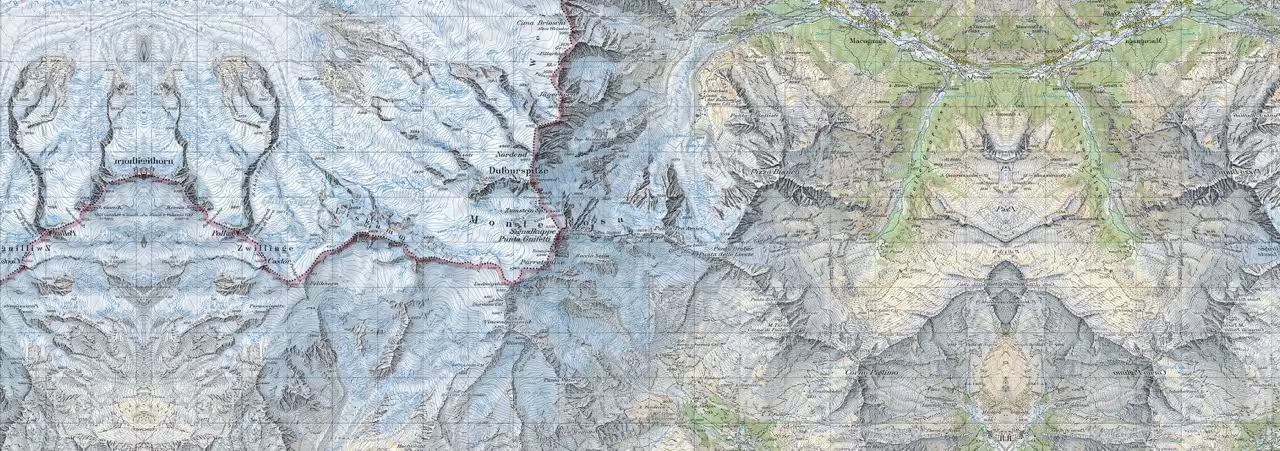
Making Data Talk teaches students how to communicate complex information clearly, efficiently, and compellingly through data visualization and infographics. In the era of big data, effective communication requires a unique blend of storytelling, analytical thinking, and visual design. This class covers the essential theory, practical techniques, and tools necessary to conceptualize and create engaging infographics that reveal meaningful patterns, relationships, and narratives within data sets. Students will explore historical contexts, contemporary best practices, and interactive approaches to visual storytelling. By the end of the course, participants will have developed their own polished infographic designed to drive engagement, sales, or brand awareness.
Learning Objectives
Students will
- Develop an understanding of core principles in data visualization and infographic design, including hierarchy, relationships, and visual compression.
- Analyze existing infographics critically, identifying the factors that make them effective or ineffective.
- Apply visual thinking and storytelling techniques to data, clearly communicating complex ideas and insights.
- Gain proficiency with key tools and software for data analysis and visualization (e.g., Google Sheets, Illustrator, Inkscape).
- Create visually compelling infographics from initial concept to refined execution, including consideration of layout, typography, color, and narrative.
- Explore and incorporate interactivity and user engagement techniques in infographic design, leveraging current technologies and platforms.
Products of Community
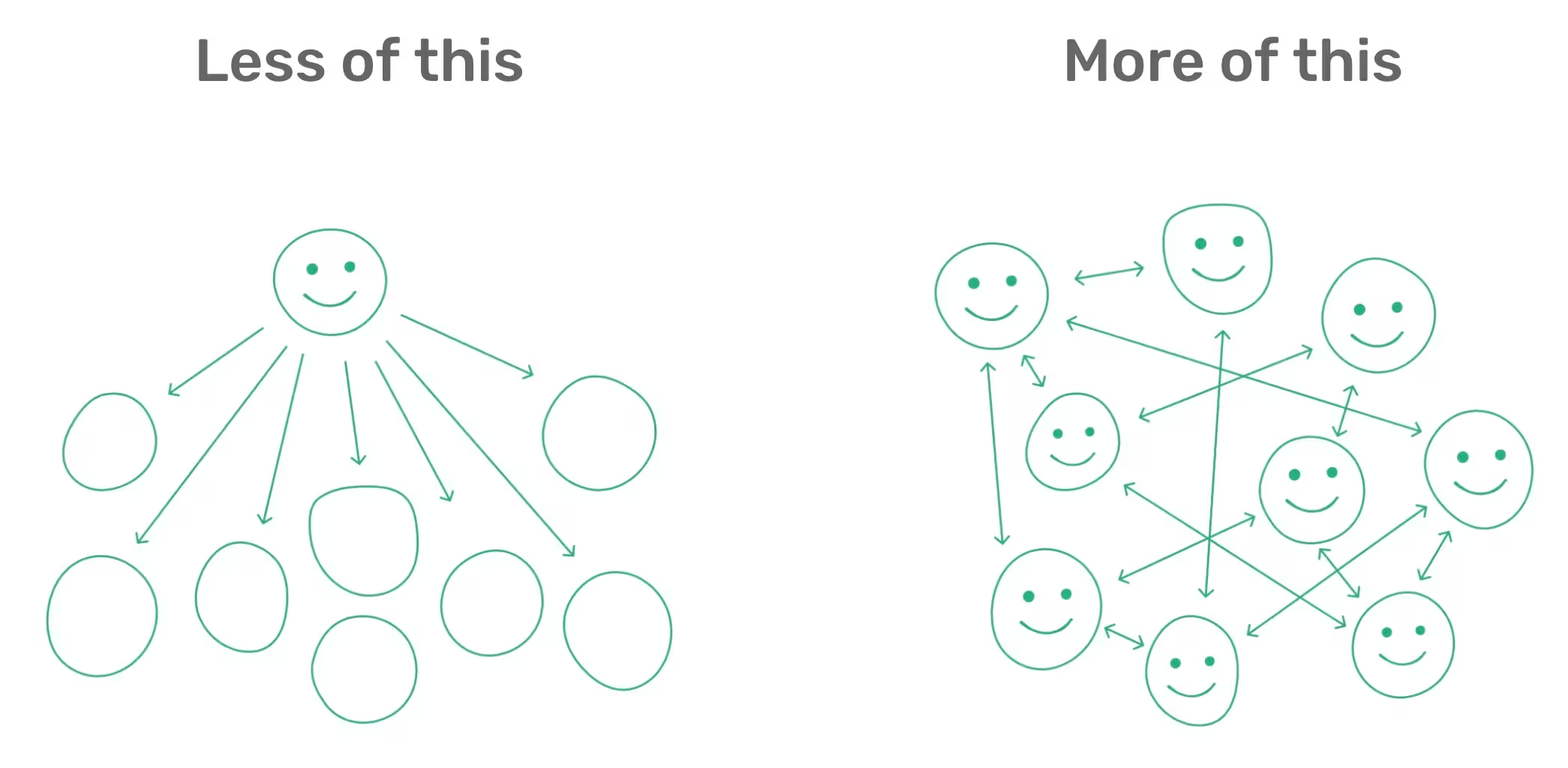
This class weaves together over a decade of my experience as a product designer, strategist, and community builder, along with the ideas I’ve shared through the Community Canvas.
Description
We live in a world saturated by social media and community-driven products, where every brand and service claims to have a community. But what truly makes a community powerful and transforms it into a successful, valuable, and sustainable offering? Genuine user resonance, product-market fit, niche differentiation, and emotional engagement have become essential competitive advantages. Particularly in an era dominated by AI-generated and AI-assisted content and products, the human experience has become more critical than ever. Students will identify a highly specific cause or need, then design a service or product addressing it, including brand identity, pitch deck, and prototypes illustrating their offering.
Learning Objective
Students will understand the foundational principles of building thriving product-centric communities, including niche identification, deep user research, iterative prototyping, and storytelling. They will acquire practical skills in leveraging AI tools to enhance user experiences, personalize products at scale, and foster emotional resonance through thoughtful, human-centered design. Additionally, students will master presentation techniques, enabling them to effectively communicate their product’s unique value to diverse audiences.
Students will
- identify niches and user challenges critical to creating resonant community-driven products
- conduct immersive user research to gather deep, context-specific insights
- prototype, iteratively test, and refine products designed around user needs and community feedback
- develop and present compelling narratives that effectively communicate product value, design intent, and community impact
Design Fiction
Description
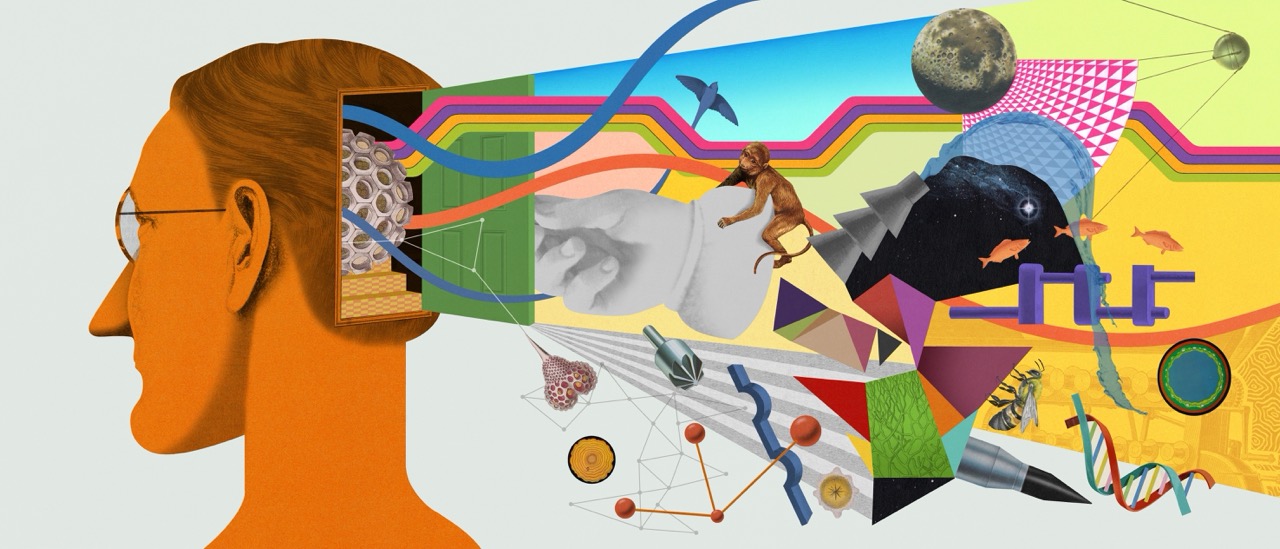
Design Fiction challenges students to push the boundaries of possibility by designing brands, products, objects, or services that exist at the intersection of the imaginable and the impossible. Drawing inspiration from emerging technologies, science fiction, and urgent global challenges, students will create tangible prototypes that explore how speculative solutions might solve an existing real world challenge. From quantum AI to gravity-defying mobility devices, anything is fair game—so long as the design addresses a real pressing societal need in a believable and thought-provoking way. By the end of the class, students will develop a compelling, story-driven presentation that brings their fictional product or service to life, illustrating its potential impact and possible pathways to real-world implementation.
Learning Objective
Students will learn to generate relevant and inventive ideas that push the boundaries of possibility while remaining grounded in logic. They will develop compelling verbal and visual narratives to communicate their concepts effectively. Through an iterative process, they will translate these ideas into tangible prototypes, whether for a brand, service, or product, students will present their projects using a medium of their choice, such as images, slides, video, audio, web, interactive, or physical formats.
Students will
- come up with relevant and inventive ideas that make sense while being an imaginative reach
- create a convincing verbal and visual narrative
- translate that into a tangible prototype for a brand, service, or product
- present the project via images, slides, video, audio, web, interactive or physical means
Curriculum
Week 1: Getting to Know Each Other
- Topic: Creating the container for the class and setting up a brave space. Introduction and getting to know each other exercise.
- Assignment: Who do you want to become?
Week 2: Global Challenges
- Topic: Exploring the pressing challenges of our time—climate change, AI ethics, resource scarcity, and social inequality—and considering the unforeseen futures they may bring.
- Assignment: Identify a global challenge that resonates with you and research its potential long-term consequences. Present your findings through a short written or visual exploration, imagining how this issue could evolve over the next 50 years.
Week 3: Fiction Favors the Bold
- Topic: Crafting compelling, plausible narratives that push the boundaries of reality while remaining believable. Exploring the role of storytelling in speculative design.
- Assignment: Write (400 words) or illustrate a short speculative scenario set in a future where your chosen challenge has drastically reshaped society. Use first-person perspective, news-style reporting, or another creative format to make it feel real.
Week 4: Problems for People
- Topic: Shifting from broad speculation to human-centered design—considering how people would interact with, adopt, or resist the fictional technologies and services we imagine.
- Assignment: Conduct an interview or create a fictional user persona based on your designed artifact. How does this product or service change their life? What unintended consequences emerge? Present your findings as a persona sheet, diary entry, or testimonial.
Week 5: Pitching Ideas
- Topic: Refining speculative concepts into a clear and compelling pitch. Presenting ideas in a way that captivates and convinces an audience.
- Assignment: Develop a 3-minute pitch summarizing your speculative product or service. Include the problem it addresses, its potential impact, and how it might become real. Use visuals, storytelling, and persuasive framing to make it memorable.
Week 6 - 16: Studio
- From here on out, the students will develop their own set of inquiries which can culminate in a few smaller projects or a larger thesis. We will have crits and discussions based on who is ready to present their realized projects.
- Visiting artists will consist of futurists, philosophers, artists, entrepreneurs and designers. They will share their experiences within the boundaries of the urban lab called New York.
Work in Public
Description
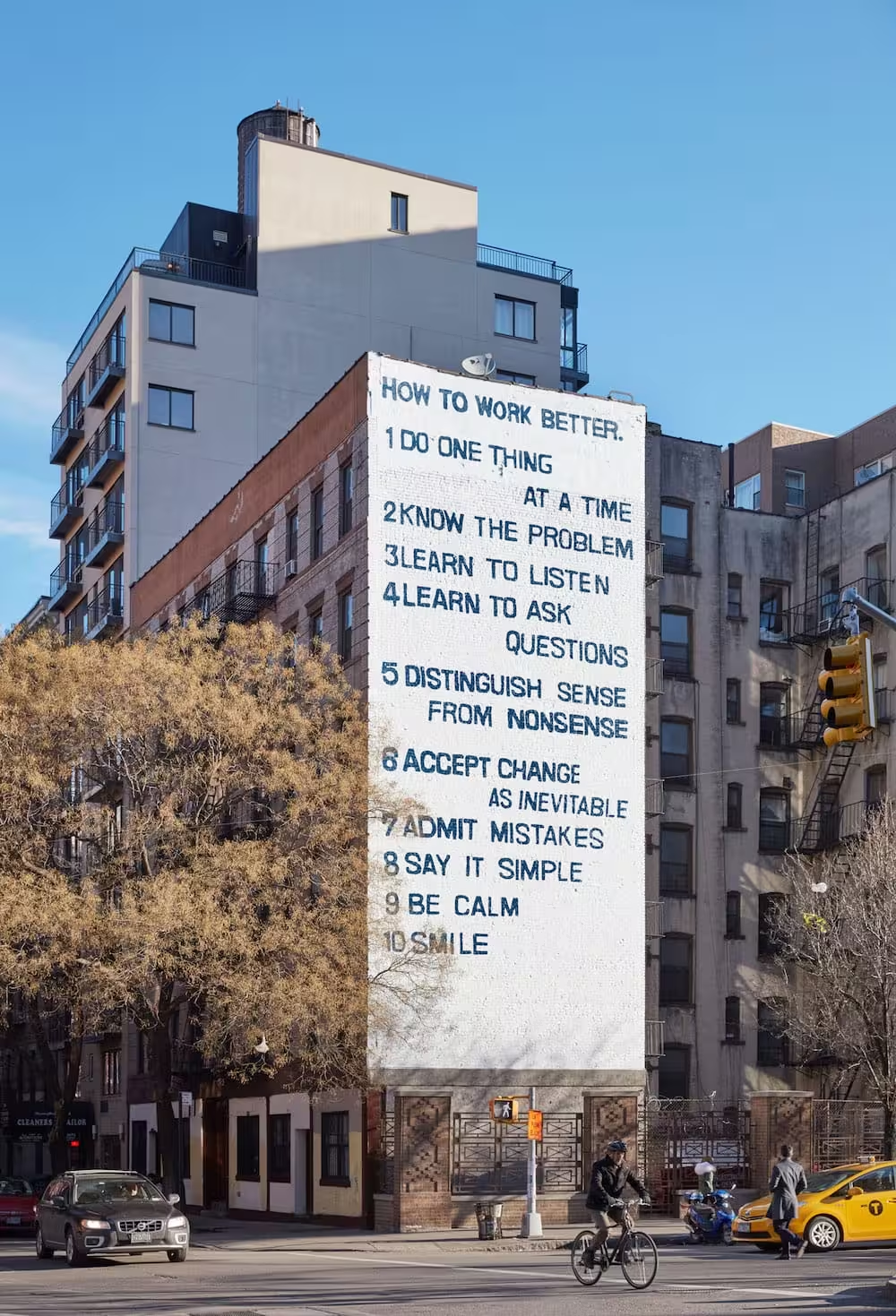
Work in Public challenges students to create art and experiences that transcend traditional boundaries, moving beyond galleries and commercial spaces to actively engage with the public sphere. Students will produce projects that are sculptural, interactive, theatrical, digital, or online, deliberately placed within the fabric of everyday life—on city streets, within public infrastructure, in digital communities, or in overlooked spaces. By stepping outside familiar institutions and feedback loops, students will foster meaningful conversations that reach diverse audiences, particularly those who have historically been excluded or unheard. Through a multidisciplinary lens, the class encourages participants to uncover commonalities, appreciate differences, and actively shape the dialogue within public spaces, ultimately contributing to the narratives that surround us every day.
Learning Objectives
Students will learn to conceptualize and create impactful public art projects designed to engage diverse audiences and foster meaningful interactions. They will explore interdisciplinary approaches, considering sculptural, interactive, theatrical, digital, and online mediums, and practice embedding their work within public contexts. Students will develop clear, purposeful narratives that bridge personal expression with broader societal relevance, ultimately presenting their projects in accessible formats that effectively reach and resonate with their intended audiences.
Art as Dissent
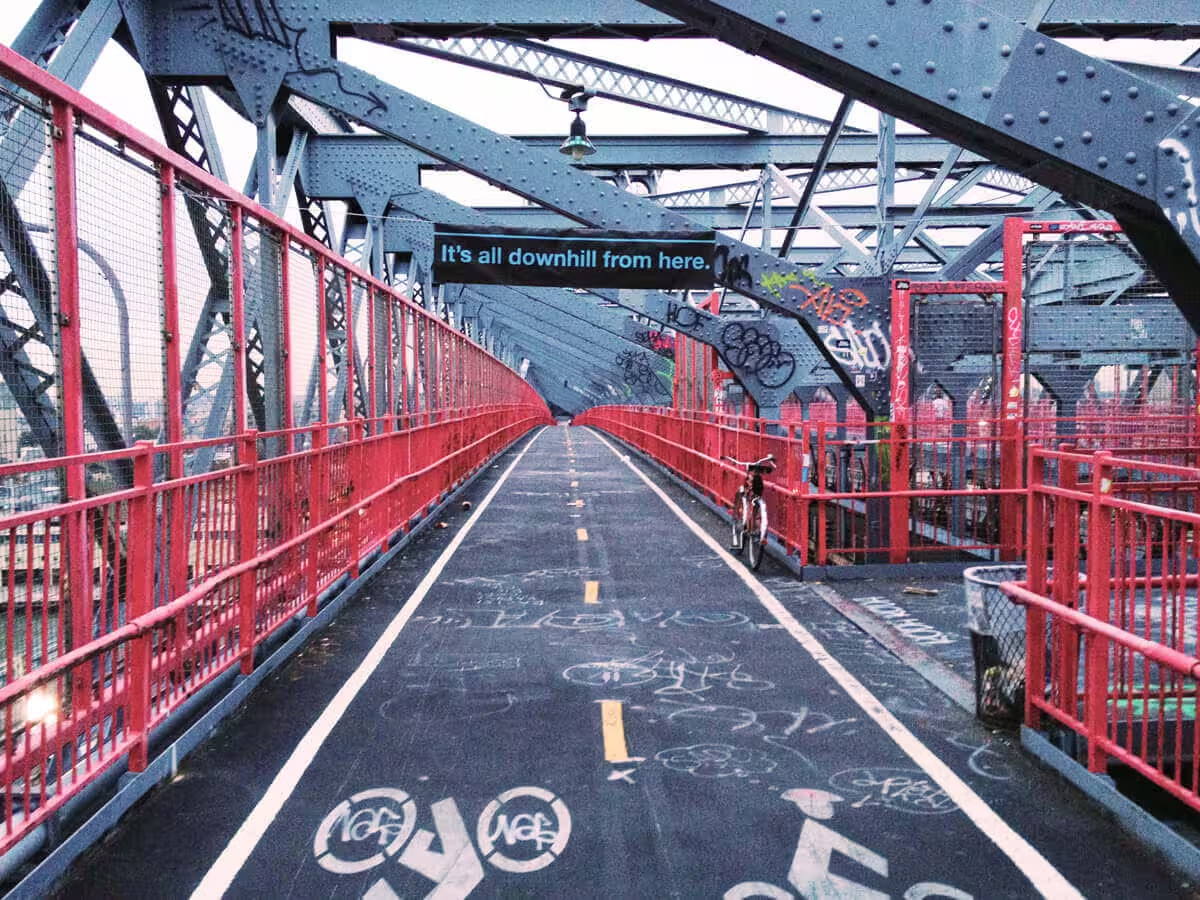
A piece I installed in 2012 on the Williamsburg Bridge. It's all downhill from here. Vinyl Banner, Steel Wire, Nuts, Bolts.
Description
Art as Dissent explores the intersection of art, activism, and radical free expression. This course examines how creative work can serve as a form of protest, challenge power structures, and advocate for change. From street art and subversive performance to digital hacktivism and guerrilla interventions, students will engage with a range of artistic practices that amplify marginalized voices and critique social, political, and cultural injustices.
Students will produce work that exists outside traditional galleries and commercial spaces, creating public-facing interventions that engage communities, spark dialogue, and provoke thought. The class encourages students to experiment across mediums—visual, auditory, and performative—while developing a deep understanding of the ethics, impact, and historical context of dissenting art.
Throughout the semester, students will critically engage with case studies, collaborate on projects, and receive guidance from guest artists and activists who use their work as a tool for disruption and social change.
Learning Objective
Students will learn to conceive, develop, and implement art-based interventions that challenge social and political norms, amplify marginalized perspectives, and provoke meaningful public discourse. They will experiment across various artistic mediums—visual, auditory, digital, and performative—and cultivate an informed, ethical practice that is safe and within the legal bounds and rooted in the historical and contemporary contexts of dissenting art.